Do you Build AI Models?

Train them with batemo!

Challenge
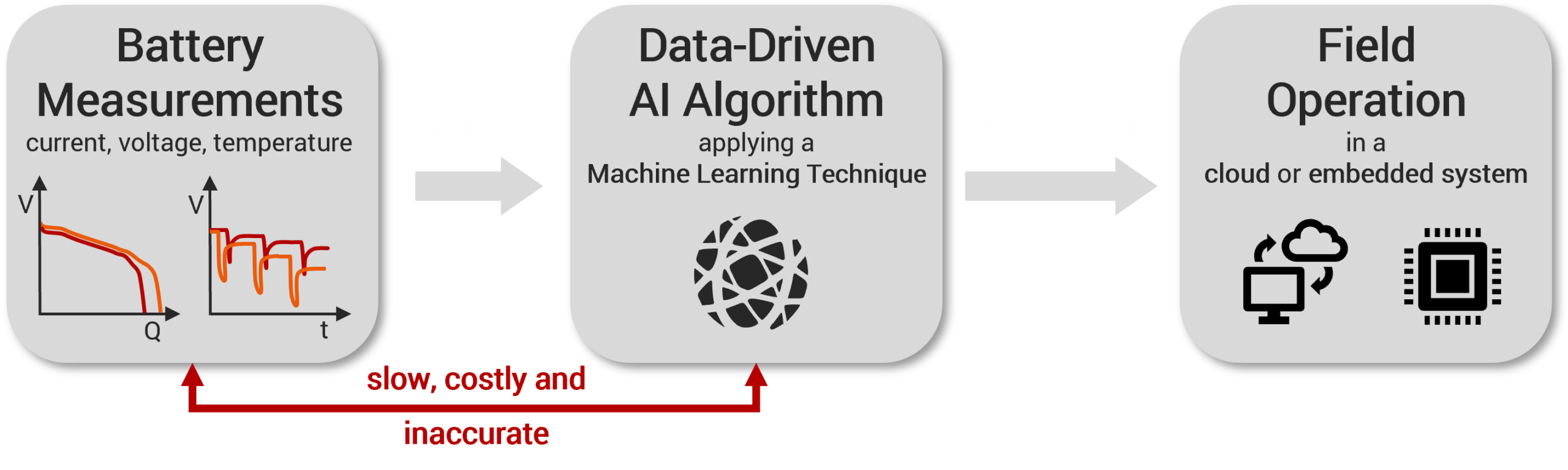
The development of data-driven artifiĀ­cial intelĀ­liĀ­gence (AI)-models or algorithms such as neural networks (ANN) or support vector machines (SVM), which use machine learning techniques to learn the linkage between battery in- and output variables, is an exciting but challenging task. It means to create a model that captures the non-correlĀ­aĀ­tive, non-linear and dynamic behavior of a real battery cell by supplying large amounts of data for AI training. Ensuring that the training data are of high quality and cover all operating conditions is essenĀ­tial for building robust AI models. Something that is missing when technology evolves fast – like in the battery business with novel chemistries that all have their own challenges. 
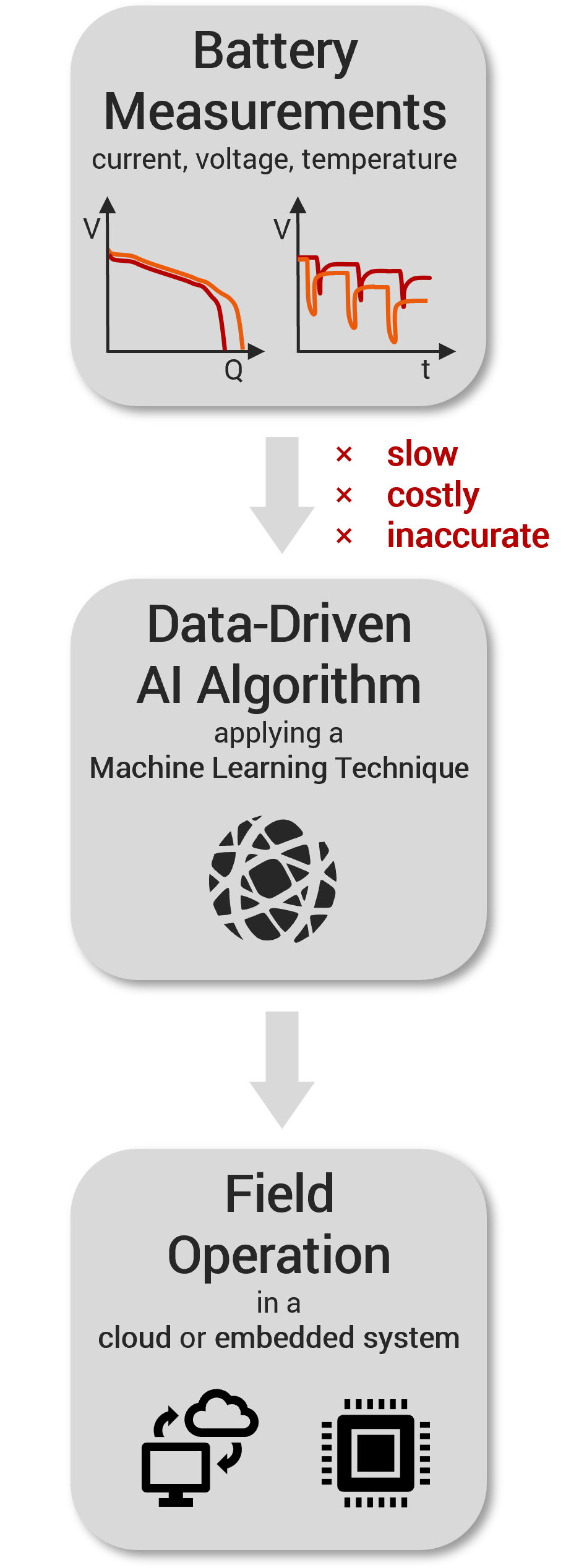
The major problem is that fast, physical and accurate battery models are missing for AI development. As alterĀ­naĀ­tive, testing-based workflows are applied. However, conducting suffiĀ­cient experĀ­iĀ­ments at the time when the datasets are needed for training is close to imposĀ­sible, as it is expenĀ­sive and time-consuming. This causes major issues when the algorithm transĀ­fers data deficienĀ­cies to inaccuĀ­rate predicĀ­tions, non-interĀ­pretability and unsafe operaĀ­tion.
This is true for many aspects of AI development. Let’s make some examples: 
Finding reliable answers to these questions fast is diffiĀ­cult… very difficult. 

Solution - Battery AI Training

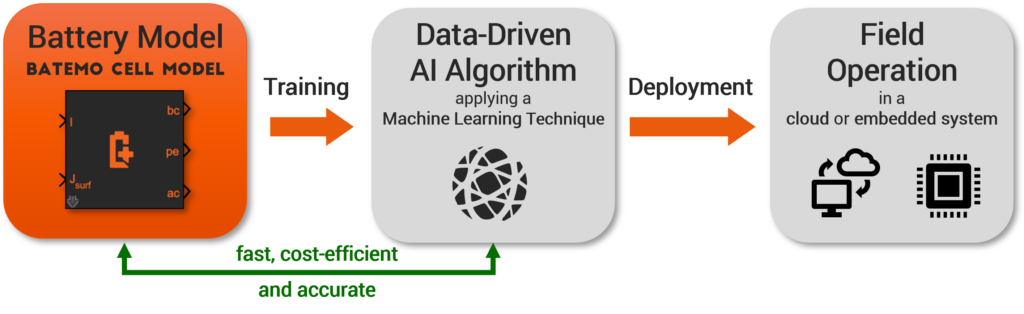
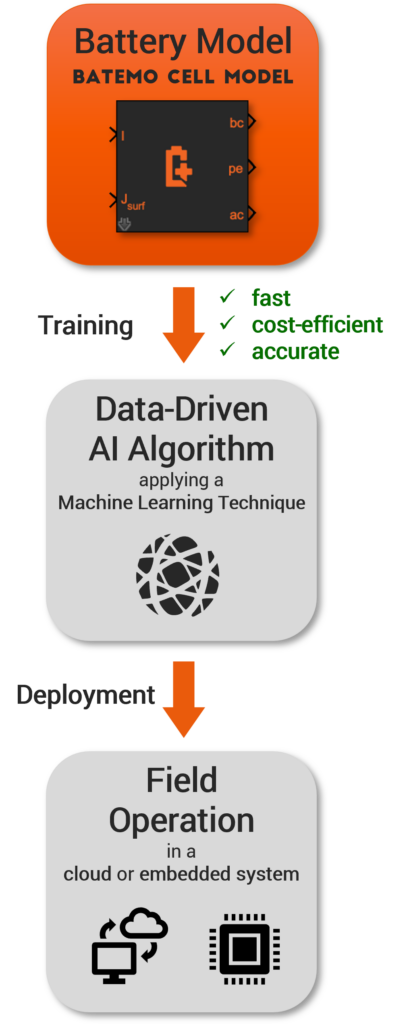
You need the ultimate tool for develĀ­oping your data-driven AI algorithm by giving it access to the best possible data base for training and validaĀ­tion. This is exactly what the Batemo Cell Models can do for you. Batemo’s unique battery modeling technology allows you to develop advanced AI algorithms based on globally validated battery cell models. The underĀ­lying idea is to develop your AI not with measureĀ­ment data, but with the most accurate battery cell models there are. With the Batemo Cell Model as high-fidelity physical core model, you ensure that everyĀ­thing during AI development holds true when you move to field operaĀ­tion. By having access to the Batemo Cell Model Library, you ensure that the training of your AI algorithms is consisĀ­tent and robust amongst all your cell types, and that you have the ideal training source for all your cells from day one. By incorĀ­poĀ­rating the Batemo Cell Models into your development, you can unlock the full potenĀ­tial of data-driven approaches to build better AI algorithms with less resources a lot faster.
batemo_Folienmaster_Icon_orange_02

Fast

The Batemo Cell Models run within seconds within a full automaĀ­tion backend. You can generate thousands of training profiles virtuĀ­ally over night, and thereĀ­with receive immediate feedback on AI functionĀ­ality and quality. 
batemo_Folienmaster_Icon_orange_29

Physical

The Batemo Cell Models are strictly physical and provide access to inner cell quantiĀ­ties. Only if you base your AI development on a physical core model that correctly splits up the underĀ­lying processes, you can enable the AI to predict the perforĀ­mance of fresh and aged battery cells under all operating conditions. 
batemo_Folienmaster_Icon_orange_09

Accurate

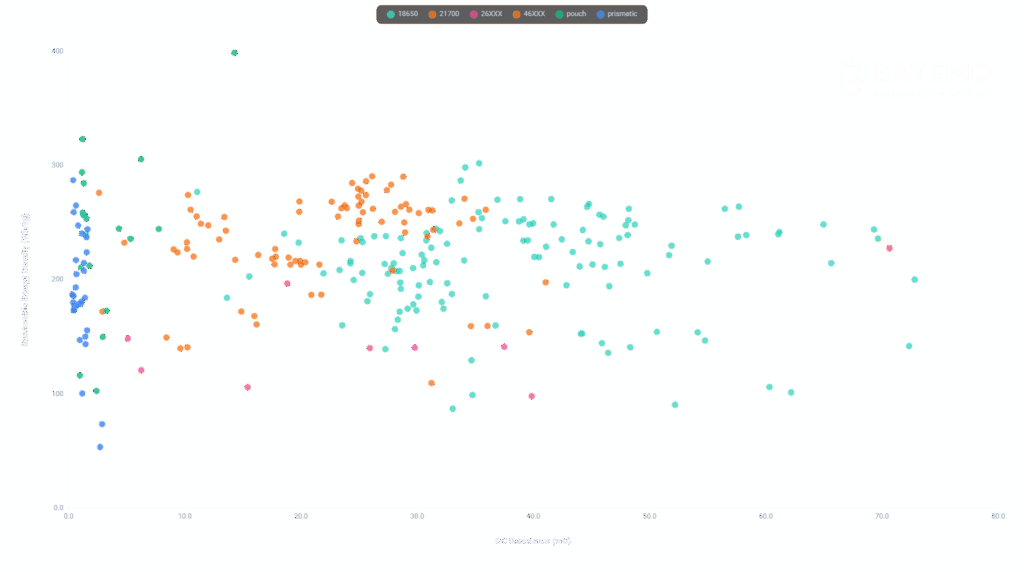
The Batemo Cell Models are the most accurate battery cell that exist on the market - guaranĀ­teed! We always demonĀ­strate the validity through extenĀ­sive measureĀ­ments that prove highest accuracy. Only in this way you can ensure that the AI receives validated cell behavior as data base. 
The methodĀ­ology we apply is novel and robust and repreĀ­sents a paradigm shift in AI development. It is based on synerĀ­gisĀ­tiĀ­cally combining physics-based Batemo simulaĀ­tions, data-driven machine learning algorithms, and testing.
  • 1st

    Get a Batemo Cell Model from the Batemo Cell Model Library or we create a Custom Cell Model specifĀ­iĀ­cally for you. 

  • 2nd

    Integrate the cell model into your preferred simulaĀ­tion environĀ­ment for develĀ­oping your AI innovations.

  • 3rd

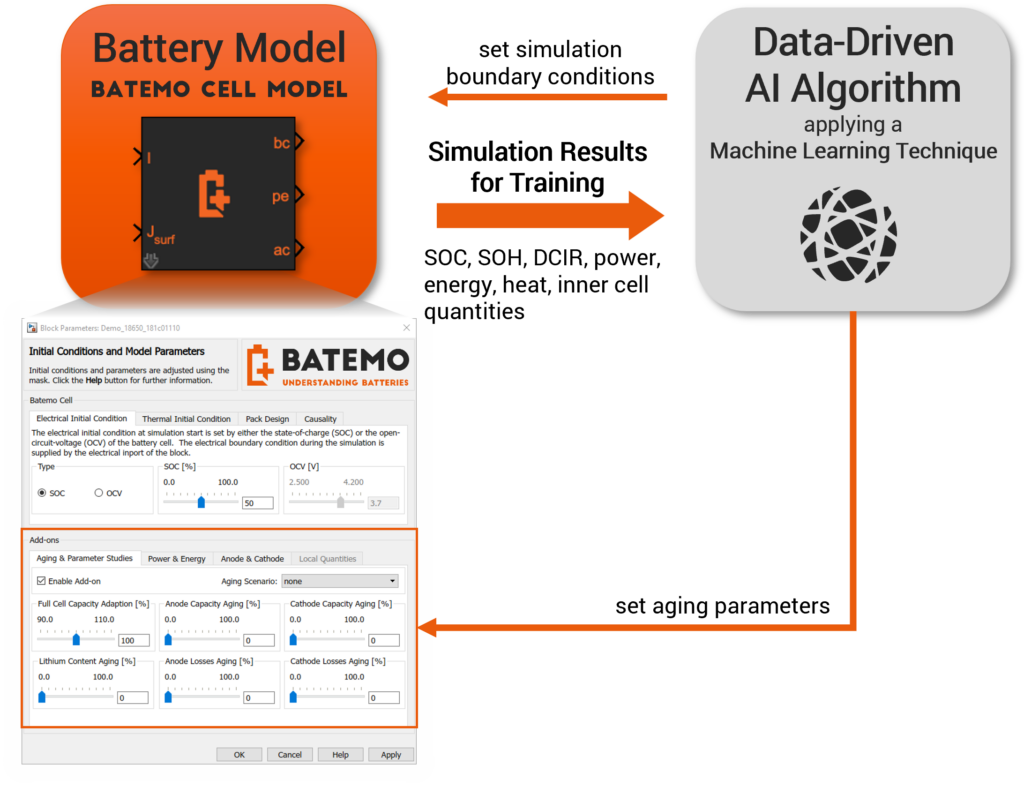
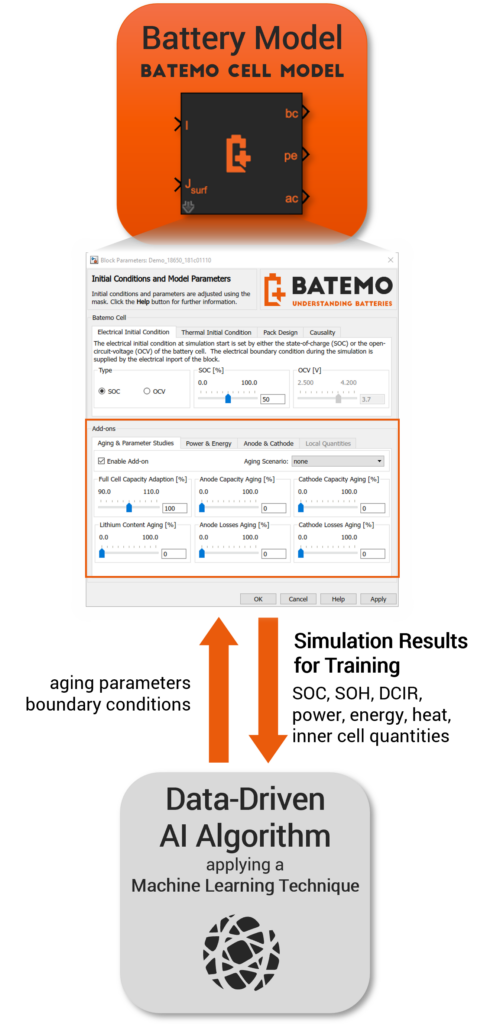
    Use software-in-the-loop development methods to train your AI algorithm based on the Batemo Cell Model as high-preciĀ­sion physical core model. Run fully automated training routines by letting the AI model control the boundary conditions and parameĀ­ters of the cell model simulaĀ­tions. Compare the predicĀ­tions of the data-driven model against synthetic validaĀ­tion sets from the high-fidelity physical model to assess accuracy and generalizability.

  • 4th

    As a final step, you move to field operaĀ­tion. Because the Batemo Cell Model is valid, you can expect straight-forward AI operaĀ­tion in the field. 

A training setup for getting the most accurate, yet flexible workflow possible to predict battery aging by connecting an AI Algorithm with the Batemo Cell Model is shown below: 

AdvanĀ­tages

By using the Batemo Cell Models to make your AI development simulaĀ­tion-based and faster, you reduce costs while obtaining better AI algorithms and results. This is how we generate value and contribute to your success. 
batemo_Folienmaster_Icon_orange_06

Better

Using the Batemo Cell Models you reduce the failure probaĀ­bility of your data-driven algorithm in your AI software by one order of magniĀ­tude. Every day you run thousands of automated test scenarios yielding a highest quality AI. In this way, you harness the full potenĀ­tial of data-driven approaches to optimize battery performance. 
batemo_Folienmaster_Icon_orange_02-1.png

Faster

With the Batemo Cell Models your AI development takes a fraction of the time. By having a model as ideal training data source at hand, you avoid spending years into testing and data processing. By getting immediate feedback on the functionĀ­ality of your adaptions and improveĀ­ments you avoid re-design loops.
batemo_Folienmaster_Icon_orange_34

Lower Cost

Conducting experĀ­iĀ­ments under various conditions to capture the full range of battery behavior is expenĀ­sive. The Batemo Cell Models lower the cost of your AI development by drastiĀ­cally reducing expenses for cell procureĀ­ment, testing and data processing. 

InterĀ­ested?

Let’s take the first step!