Charging Time is key for high product quality.
But how to achieve charging times of
less than
15 min
?
Challenge
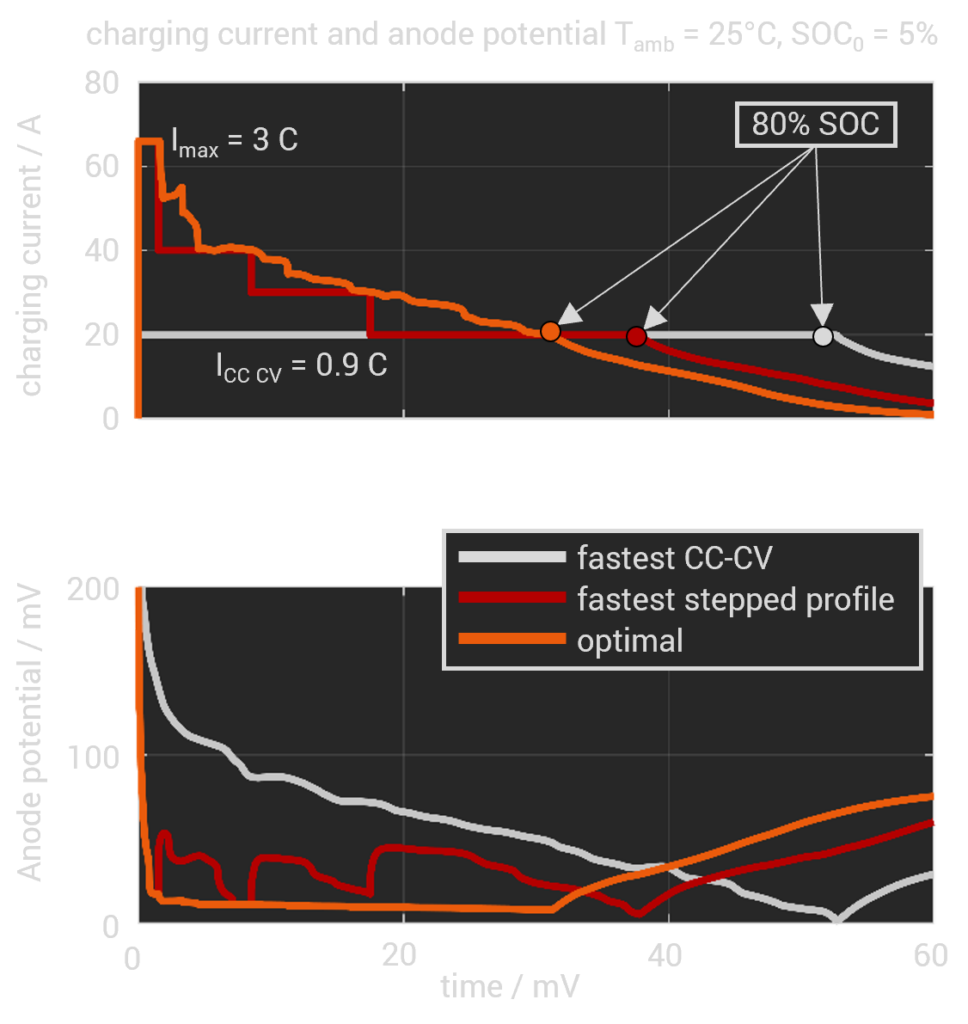
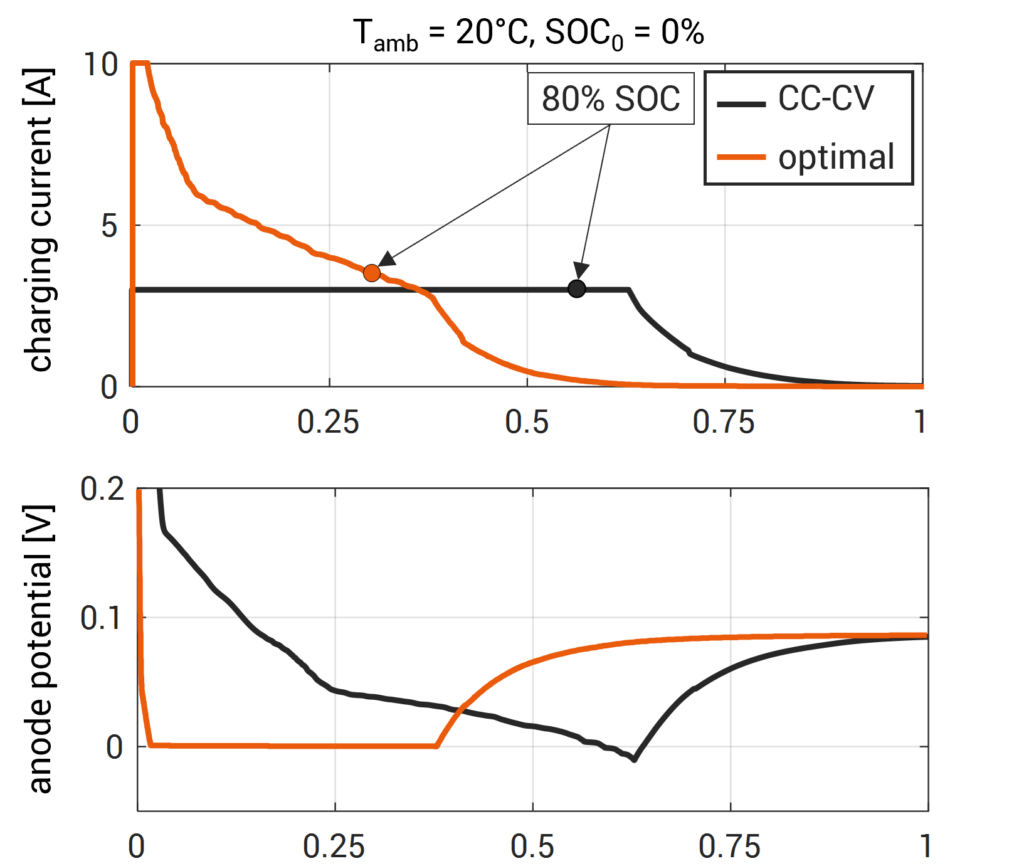
The fast-charging capability is a decisive purchase requireĀment, not only for electric vehicles. Five boundĀaries are techniĀcally restricting the charging time as shown below. Violating the cell-specific limits leads to accelĀerĀated cell aging or even safety risks. The progresĀsion of the maximum permisĀsible charging current over time, considĀering all five limits, depends on the electroĀchemĀical and thermal initial and boundary conditions in a strongly nonlinear manner. In addition, as the anode surface potenĀtial inside the cell is not experĀiĀmenĀtally accesĀsible, the suitability of a charging current profile can only be tested indirectly by costly and time-consuming cycling tests.
The five limits of fast-charging
1
power
2
current
3
temperĀaĀture
4
voltage
5
anode
Solution - Battery Fast Charging
Fast
Physical
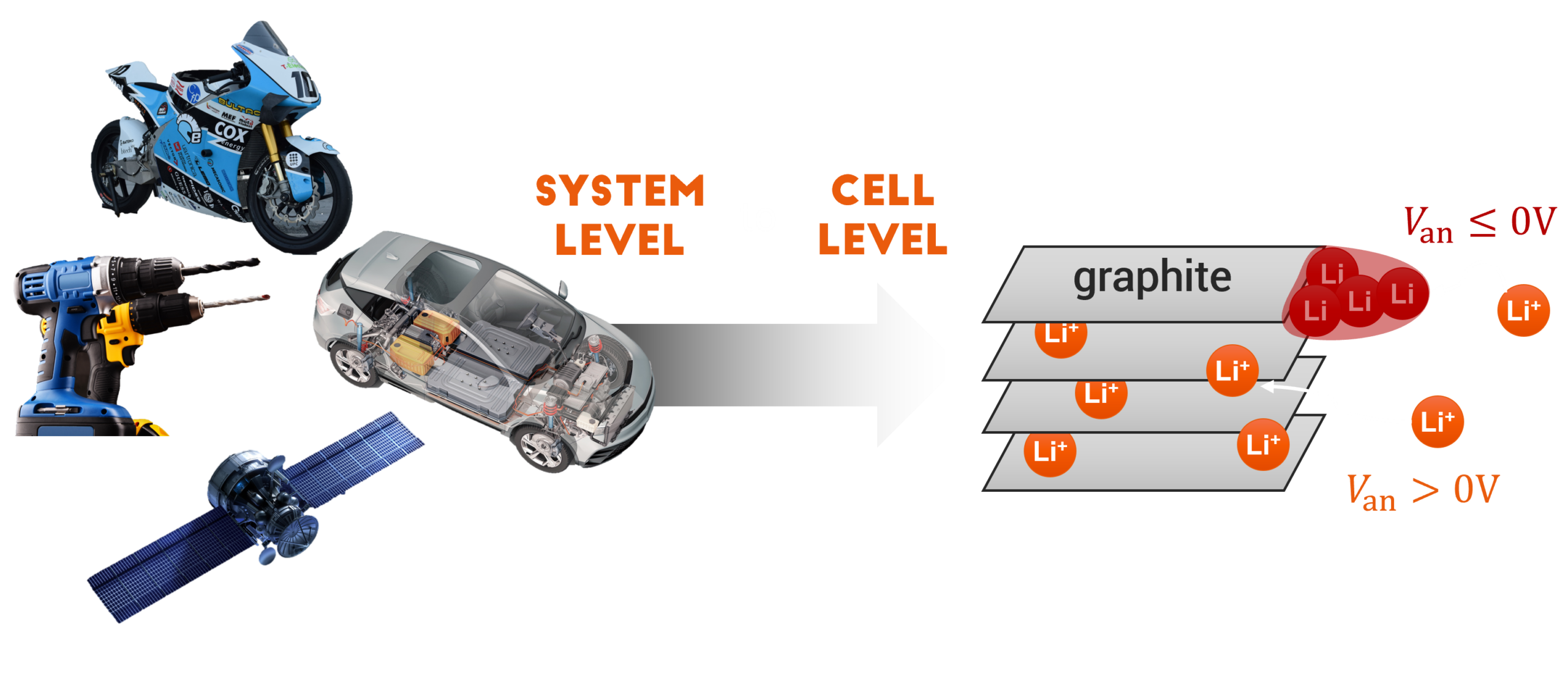
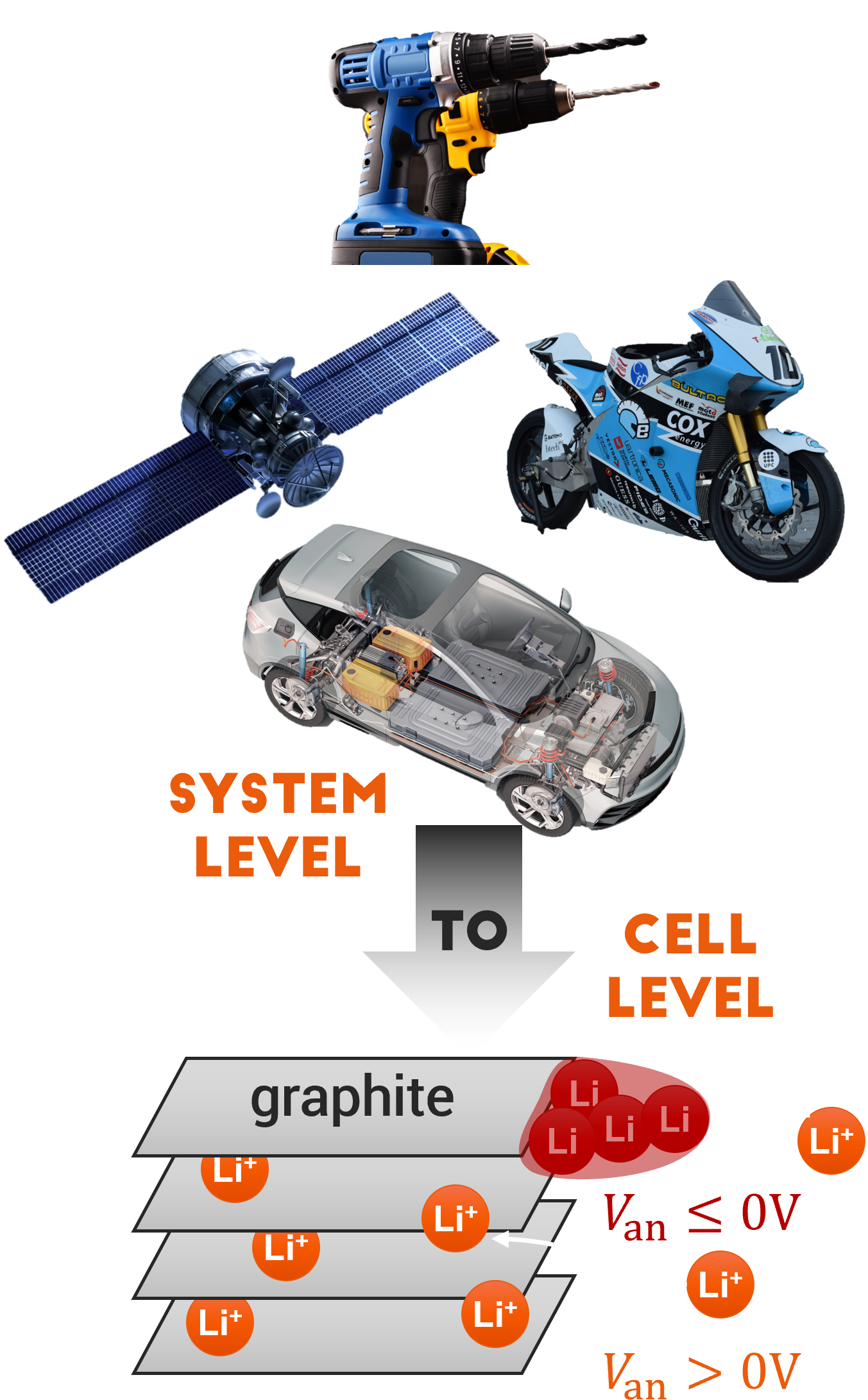
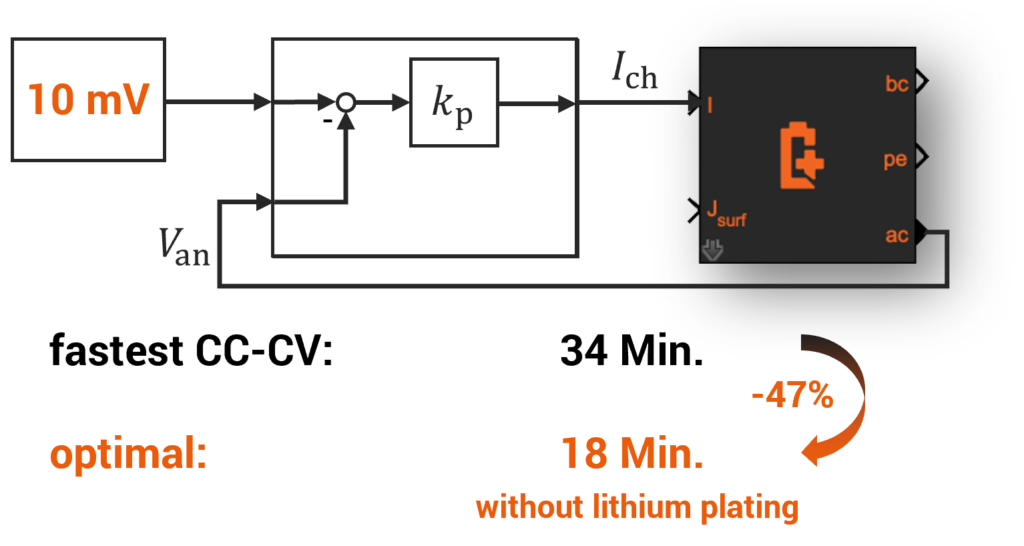
Only if you split up the physical processes in the cell correctly, you can calcuĀlate the anode surface potenĀtial and access all five limits of fast charging simultaneously.
Accurate
development method
-
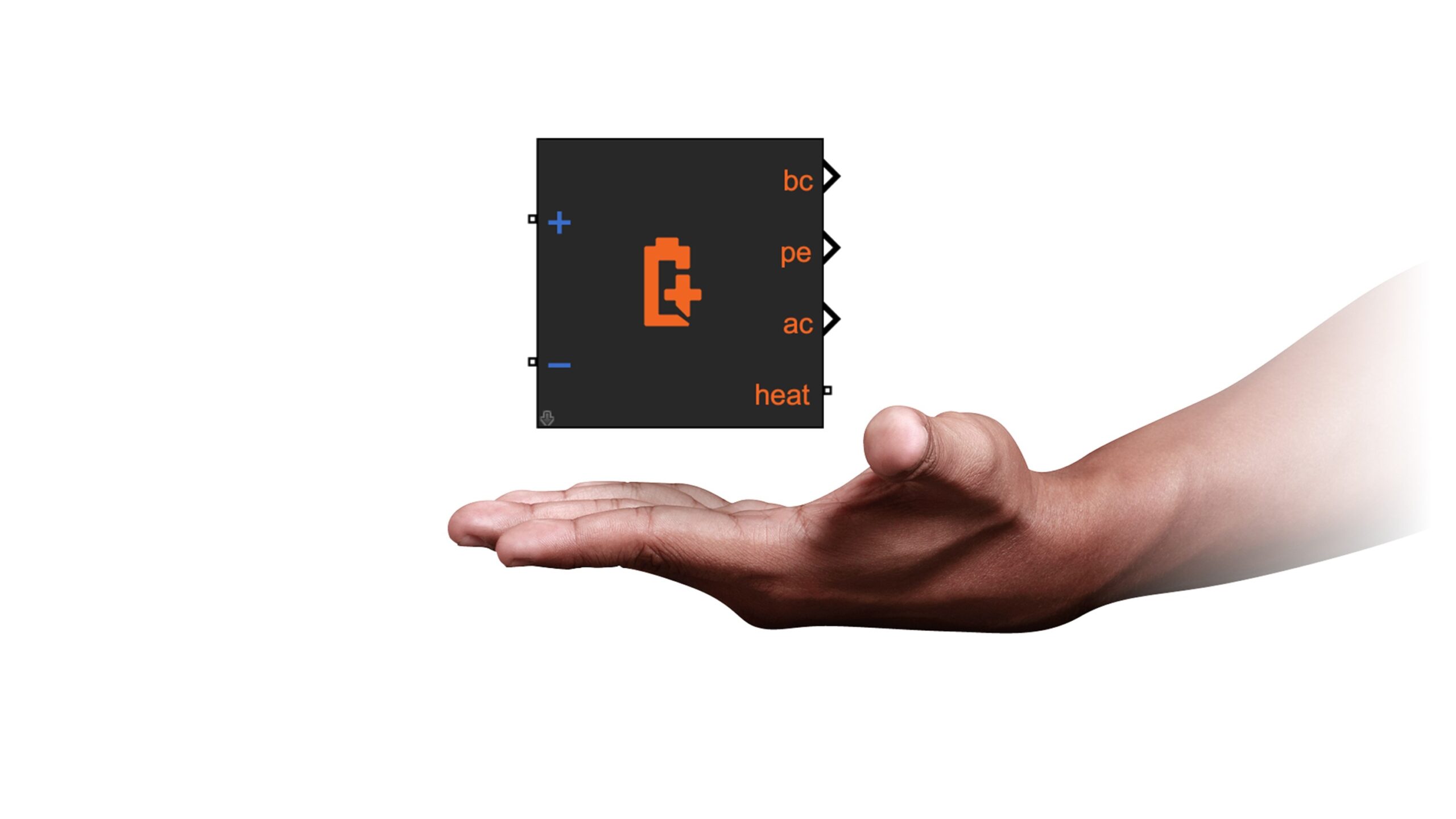
Get the Batemo Cell Model to have a physical, parameĀterĀized and validated battery cell model.
-
Integrate the cell model into your module model.
-
Do batch simulaĀtions and derive optimal fast charging profiles and operaĀtional strateĀgies.
avoid lithium plating!
-
Use the Batemo Cell Model to do a design of validaĀtion experiments.
-
Perform the validaĀtion experĀiĀments and directly impleĀment it in your BMS!

AdvanĀtages
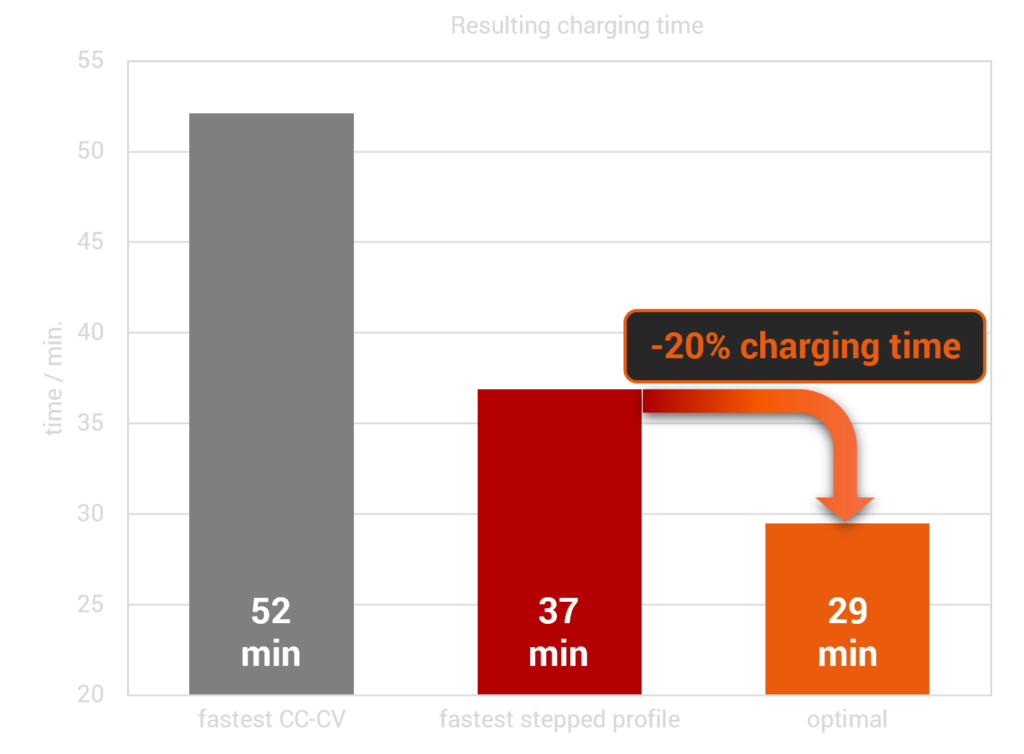
-20%
Charging Time
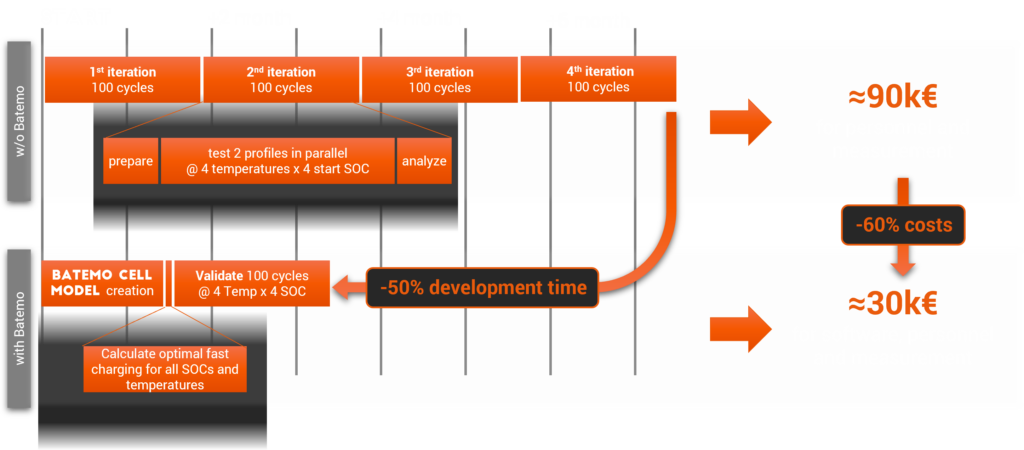
-50%
Development Time
-60%
Development Costs
Charging Time
Example: Tesla Model Y (4680)
Development Time and costs
Without Batemo Technology