Batemo Cell Report
Know what is inside a battery cell without opening it yourself.
The Batemo Cell Report is a teardown report delivered as a PDF. It documents the construction, the safety features and the materials of a battery cell, down to the micrometer scale.
Why you need to look inside a cell.
The Batemo Cell Report shows how a battery cell is built inside. In battery system development, you need to know the cells you work with. Cell performance is one part of that.
The other part is the cell technology: the internal construction, the safety features, the materials and the chemistry. To see these, someone has to open the cell. Opening cells is difficult and potentially dangerous, and it is an environmental hazard.
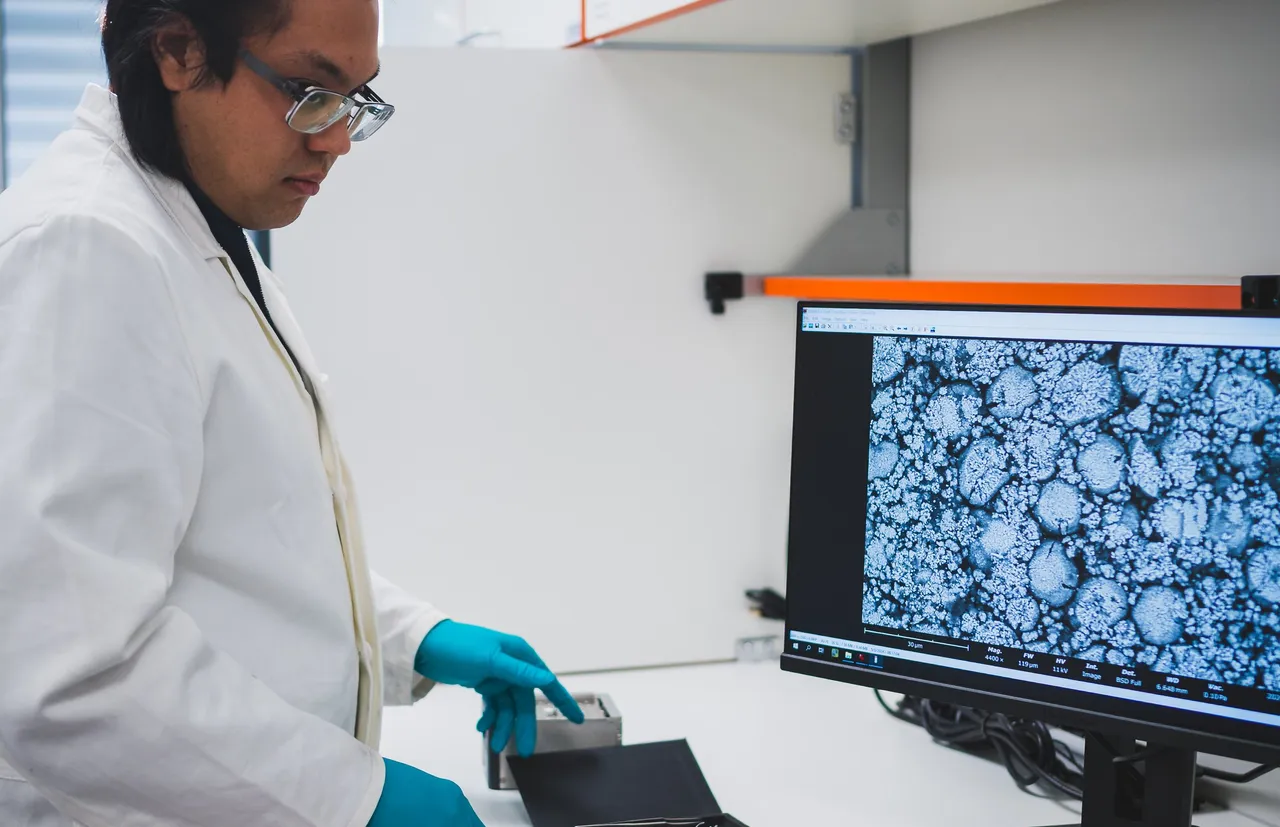
It needs proper equipment, careful handling and experience. Batemo opens the cells in its own lab and documents what it finds. The report contains pictures, sketches and descriptions of the important aspects of the cell.
You do not need this for every cell. You need it for the cells on your shortlist. When you benchmark candidates, the internal construction shows whether two cells are really the same or which one suits your application better, because the construction explains much of how a cell behaves. A report also tells you whether a second-source cell matches the cell you use today. Batemo engineers help you read the results.

- Cell housing
- Safety features
- Connection tabs
- Cathode
- Separator
- Anode
Off the shelf and measured down to the micrometer.
Batemo Cell Reports for the cells listed in the Batemo Cell Explorer are available off the shelf. Each report is based on physical measurements from the Batemo lab. For a cell that is not in the library, you can request a new report.
Measured discharge
voltage / V · surface temperature / °C
capacity / Ah
- 0.21 A
- 2.13 A
- 8.51 A
- 17.02 A
- 25.53 A
- Fast
- Reports for listed cells are available off the shelf. You receive the report within days. The complete documentation lets you analyze the cell technology quickly and reliably.
- Physical
- The report describes the internal structure of the cell with physical measurements. It includes layer thicknesses, SEM images and material analysis with EDX.
- Accurate
- The report documents the cell down to the micrometer scale. Batemo needs data of this quality because it builds the Batemo Cell Model from the same lab work, the most accurate battery cell model on the market.
What the Batemo Cell Report contains.
The Batemo Cell Report is a PDF document with five sections. It describes and shows the windings, the layer thicknesses, the coating and the safety features of the cell, down to the microstructure and the electrode materials.

Performance overview
A summary of the cell performance as table data. Characteristic performance graphs at 25 °C ambient temperature.

Cell exterior
Pictures and sketches of the cell exterior. Mechanical quantities such as dimensions, volume and mass.
Cell interior
Details of the cell housing, the connection tabs and the jelly roll. Details of the anode, cathode and separator sheets. The weight distribution of the cell components.

Safety features
Internal short protection and fuses. A pressure release or burst valve, if the cell has one.

Microstructure and material
SEM images of the anode and cathode microstructure. EDX analysis that identifies the electrode materials, including their stoichiometry.
Available reports are listed in the Batemo Cell Explorer. →
Pages from the sample report for the muRata US18650-VTC4.
What you gain from a Batemo Cell Report.
The Batemo Cell Report replaces the teardown in your own lab. Available reports are listed in the Batemo Cell Explorer.
Deeper know-how
You understand the cells you work with in depth. You can evaluate their technology and their safety, and build a long-term cell strategy on it.
Faster
You do not spend lab time on opening cells. You receive a complete teardown report within days.
Lower cost
You spend less on chemical labs and on buying cells. The information on the cells in the Batemo Cell Explorer is already available.
Frequently asked questions
What is a battery cell teardown report?
A battery cell teardown report documents what is inside a cell after it has been opened in a lab. The Batemo Cell Report is such a report, delivered as a PDF. It contains pictures, sketches and descriptions of the cell exterior, the internal construction, the safety features, and the microstructure and materials of the electrodes. You get this information without opening a cell yourself.
What does the Batemo Cell Report contain?
The Batemo Cell Report has five sections. A performance overview with table data and graphs at 25 °C. The cell exterior with dimensions, volume and mass. The cell interior with housing, tabs, jelly roll, electrode and separator sheets and the weight distribution. The safety features, such as fuses and burst valves. And SEM images and EDX analysis of the electrode materials, including stoichiometry.
How fast do I get a Batemo Cell Report?
Reports for most cells listed in the Batemo Cell Explorer are available off the shelf: you order today and receive the report within one day. Not every cell in the Batemo Cell Explorer has been opened yet. If a cell is currently being analyzed, Batemo can react quickly and provide the report. You do not need to buy cells, plan a teardown or wait for lab capacity. The Batemo Cell Explorer shows which cells already have a report.
Why not open the battery cell myself?
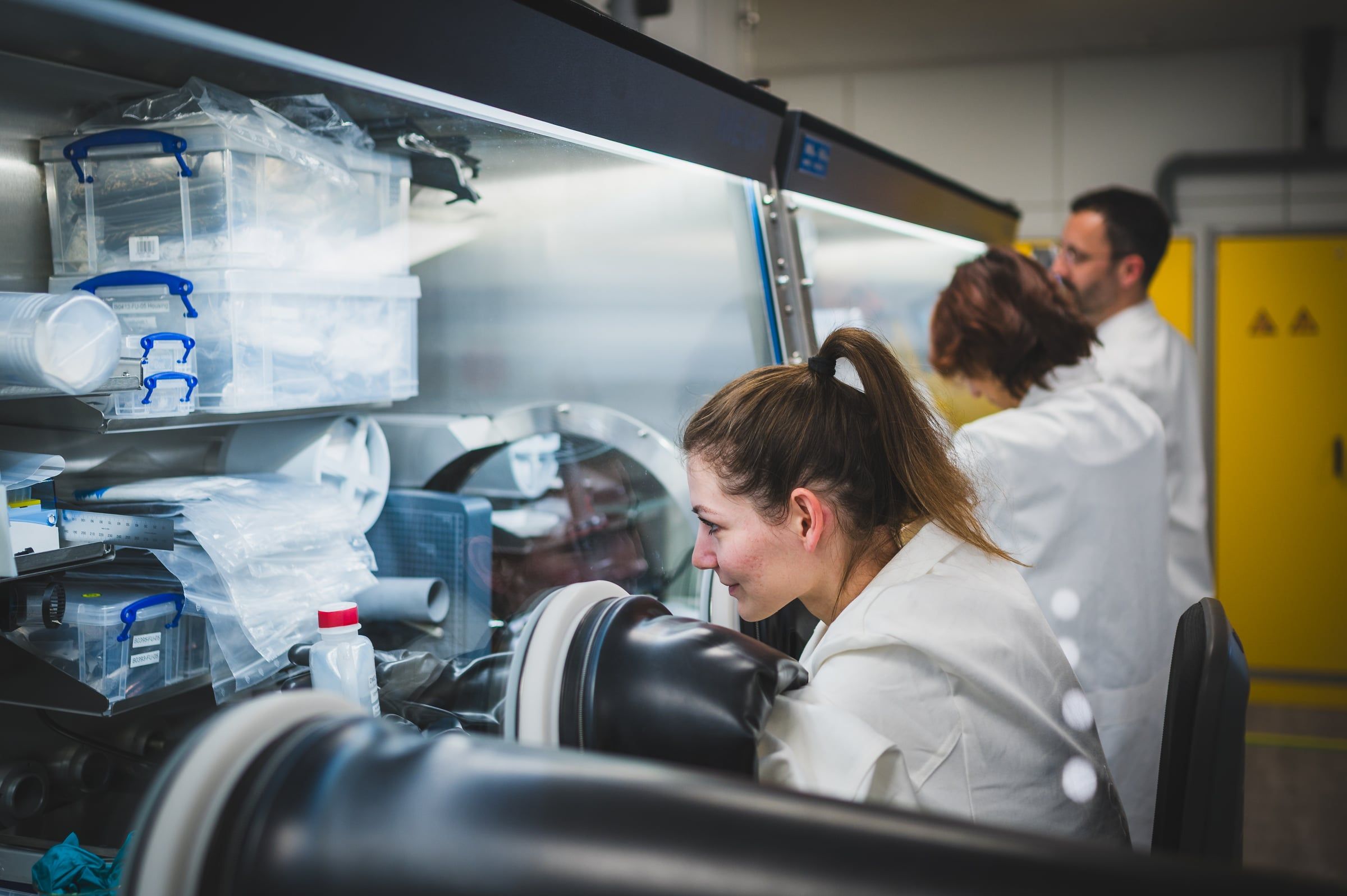
Opening battery cells is difficult and potentially dangerous, and it is an environmental hazard. It needs proper equipment, careful handling and experience. Batemo opens cells in its own lab, which includes a glovebox with a purified argon atmosphere. With the Batemo Cell Report, you save the lab time for the teardown and the cost of chemical labs and of buying the cells.
Start from your question, not from our product names.
Seven things Batemo delivers. Which one you need depends entirely on what you are trying to find out.
Which cells should I even be looking at?
Measured behavior of every cell in the library, side by side — including what the public Explorer does not show.
Batemo Insights
How will this cell behave in my system?
A physical simulation model of the cell that runs in your own environment, under conditions you have never tested.
Batemo Cell Model
What did this cell actually do on the bench?
The full experimental characterization across the operating range, as measured — plus the viewer to read it.
Batemo Cell Data
What is inside this cell?
A teardown report: materials, internal construction and safety-relevant findings, without opening a cell yourself.
Batemo Cell Report · you are here
Where inside the cell does it get hot?
A spatially resolved model of a sub-volume — local distributions the one-dimensional cell model averages out.
Batemo Cube Model
What happens if I change the cell itself?
Vary design parameters of an existing cell and see the consequence before anyone builds a sample.
Batemo Cell Designer
How does this scale to a module and a pack?
From cell to pack: cooling, mechanics and cost weighed against each other in simulation.
Batemo Pack Designer
Talk to an engineer who knows the cells.
Together you check whether a Batemo Cell Report answers your question, and for which cells on your shortlist you need it.
Or start with the measurements — explore the public Batemo Cell Explorer →