Batemo Cube Model
Study the 3D behavior inside a battery cell
The Batemo Cube Model simulates local distributions of temperature, current and other internal quantities inside a battery cell. It is based on the Batemo Cell Model and resolves the cell interior in several dimensions.
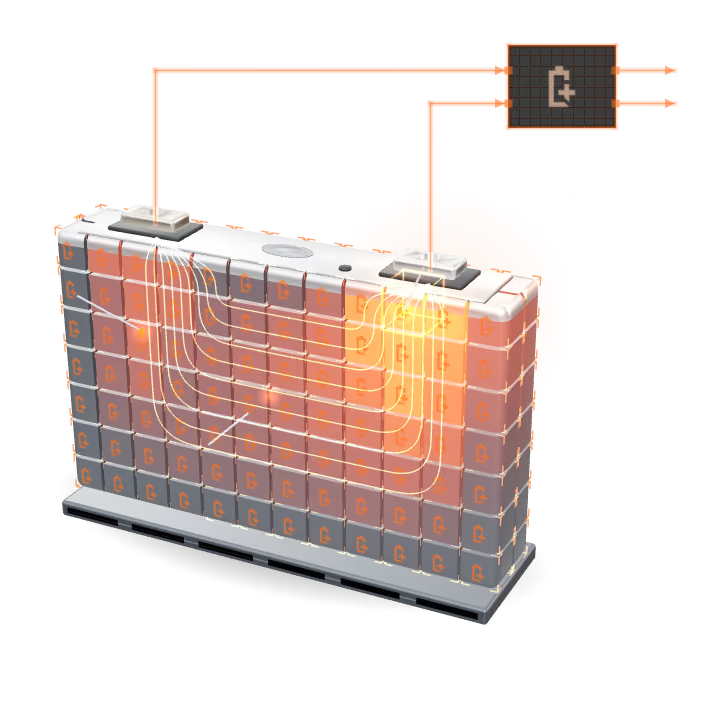
1/6The starting point is the active volume of a real battery cell.
2/6Batemo Cube Models divide this volume into parts. You choose how fine the division is.
3/6The heat and current transfer between the Cube Models, the cell housing and the poles is modeled outside the Cube Models.
4/6The simulation shows how temperature and other quantities vary inside the cell.
5/6You identify and predict local hot spots that matter for aging and safety.
6/6You use the results to develop design improvements and better cooling concepts for the cell.
The Batemo Cube Model is based on the Batemo Cell Model.
The Batemo Cube Model is derived from the Batemo Cell Model and uses the same modeling technology. It lets you choose how finely the cell interior is divided. The result is a precise, spatially resolved picture of what happens inside the cell.
Measured discharge
voltage / V · surface temperature / °C
capacity / Ah
- 0.48 A
- 4.76 A
- 9.52 A
- 14.29 A
- Fast
- Multi-dimensional battery simulations usually need a lot of computing time. A Batemo Cube Model runs in minutes. The runtime depends on how finely you discretize the cell.
- Physical
- A spatially resolved result needs a precise description of all relevant electrical, chemical, thermal and physical processes in the cell. The Batemo Cube Model stays physically correct, even under extreme conditions.
- Accurate
- The Batemo Cube Model is derived from the Batemo Cell Model and uses the same modeling technology, whose validity Batemo demonstrates with extensive measurements.
Each Batemo Cube Model represents a part of the cell's active volume.
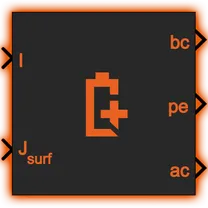
A Batemo Cube Model is an electrochemical model of a fraction of the jelly roll, the wound electrode stack inside the cell. Like the active volume of a real cell, it has an electrical and a thermal interface. You set the initial conditions in a graphical parameter interface.
The heat and current transfer between the Cube Models, the cell housing and the poles is modeled outside the Cube Models. Once that model of the other cell components is set up, you supply the electrical and thermal boundary conditions and start the simulation. Setting up a model of a real cell this way takes some modeling expertise.

Real battery cell
The starting point is the active volume of a real battery cell.
3D discretization with Cube Models
Batemo Cube Models divide this volume into parts. You choose how fine the division is.
Inner temperature distribution
The simulation shows how temperature and other quantities vary inside the cell.
What the Batemo Cube Model shows inside a battery cell.
The Batemo Cube Model shows local distributions of all internal cell quantities. You see temperature and current inhomogeneities and can quantify critical ones. The model also calculates quantities that a laboratory measurement does not deliver: inner temperatures, electrochemical electrode potentials and where losses are generated.
Find local hot spots
You identify and predict local hot spots that matter for aging and safety.
Improve design and cooling
You use the results to develop design improvements and better cooling concepts for the cell.
Trigger a local short
You can trigger a local short circuit manually in the simulation.
Try a different housing
You can change the external model to see how the same active material would perform in a different housing type.
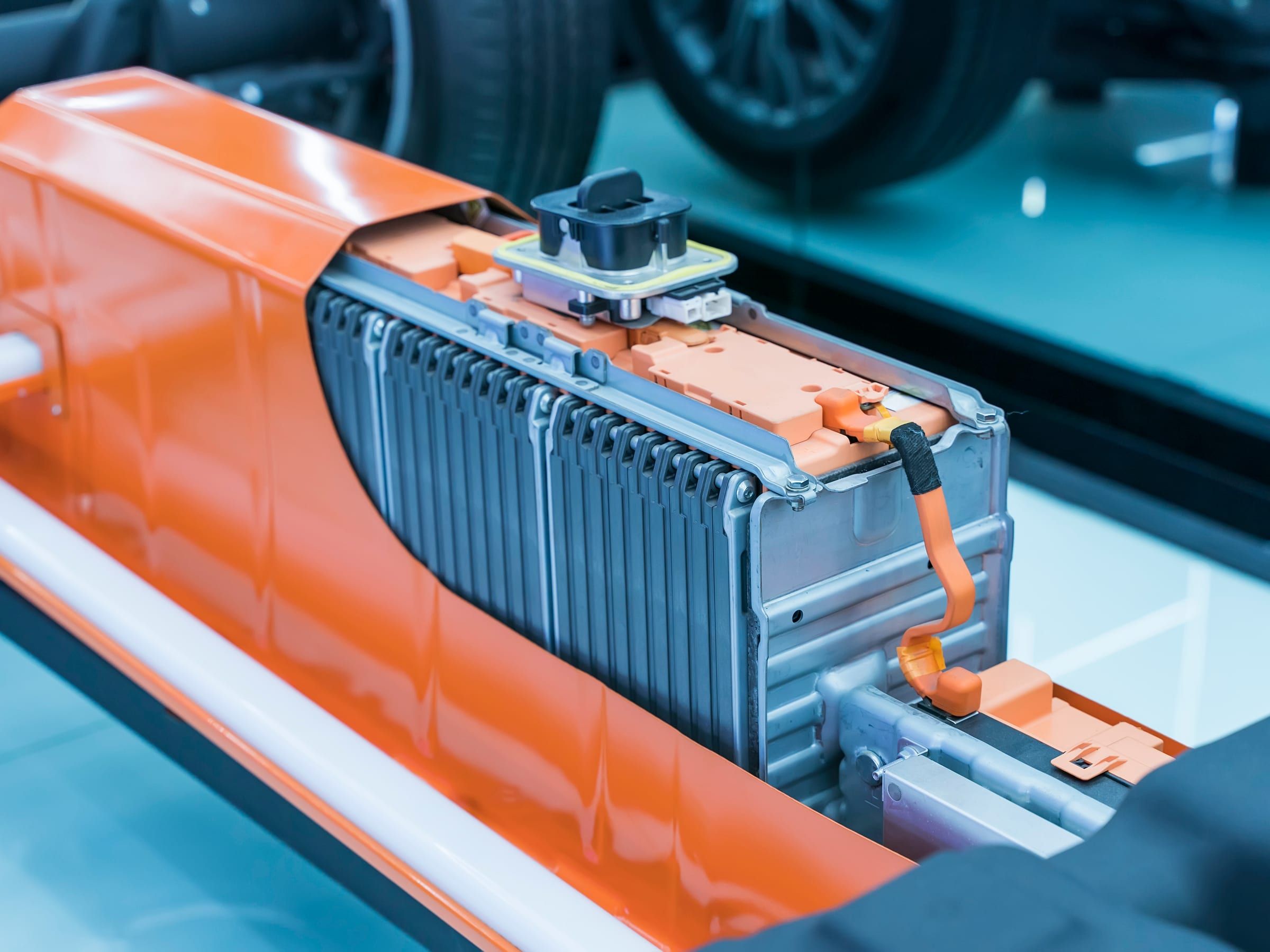
Every Batemo Cube Model starts from a Batemo Cell Model.
The Batemo Cell Model behind a Batemo Cube Model comes either from the Batemo library or is built for your own cell. Batemo Cube Models are not part of the subscription: we create them on request, as a separate order.
For cells in the library
Batemo Cell Model Library
- For any cell in the Batemo Cell Model Library, we create the Batemo Cube Model on request, as a separate order.
For your own cell
Custom Batemo Cube Model
- If you have your own cell and want to keep everything confidential, we create the Batemo Cube Model exclusively for you.
Batemo Cube Models run in your simulation environment.
We integrate the Batemo Cube Models into your simulation environment, so you can build on your previous work. Built-in integration is available for MATLAB Simulink, MATLAB Simscape, Simcenter Amesim, AVL CRUISE M, AVL FIRE M, Elements and Cradle CFD. A Batemo Cube Model is also available as an FMU, which runs in all common simulation tools.
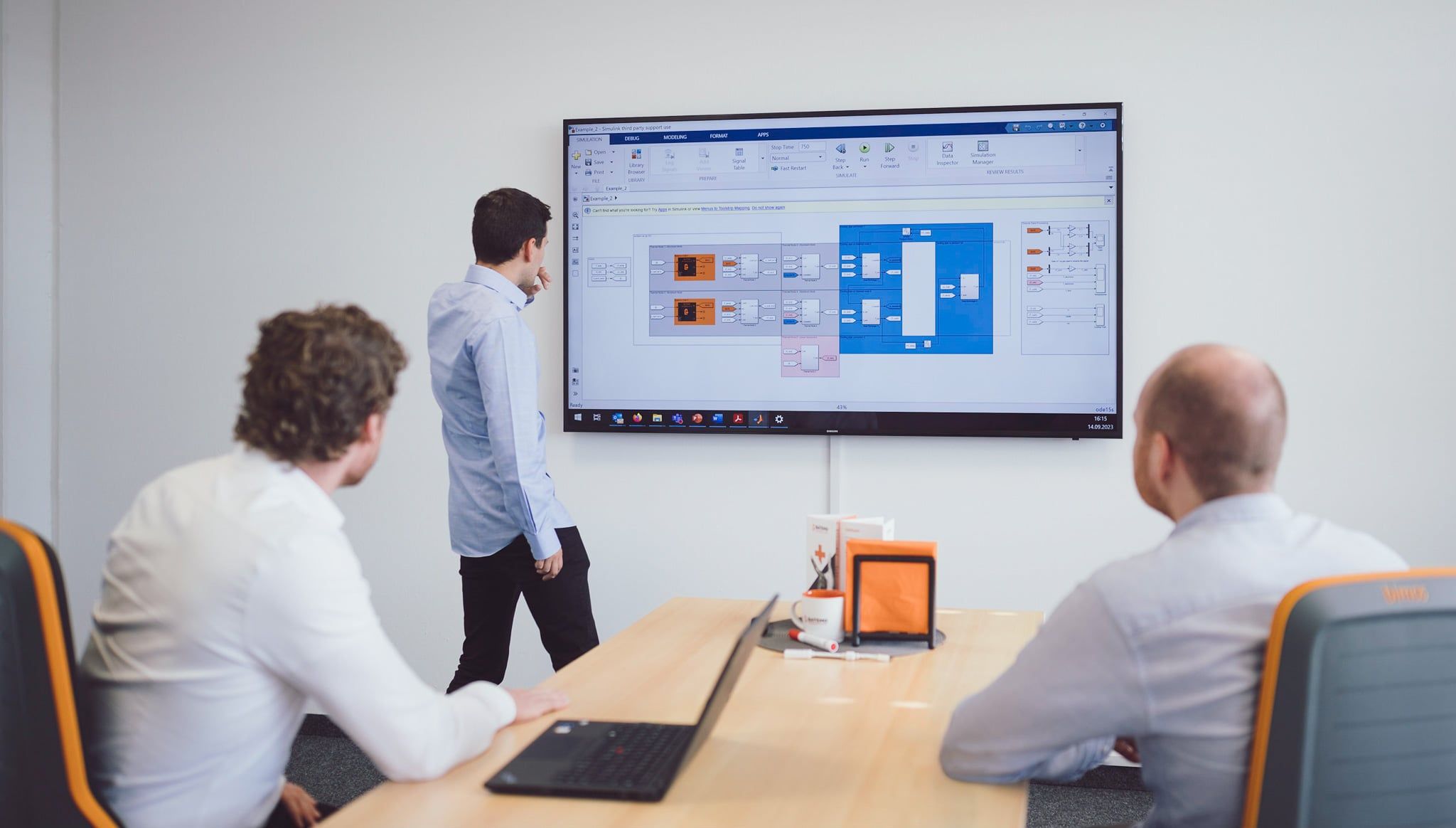
 MATLAB Simulink
 MATLAB Simscape
 Simcenter Amesim
 AVL CRUISE M
 AVL FIRE M
 Elements
- Cradle CFD
 FMU
Start with Batemo Support
We schedule regular calls with Batemo Support to get you started, and we stay with you until your simulation delivers results. You receive a ready-to-use model that you can modify to your needs.
First project with Batemo Engineering
Batemo Engineering can do your modeling and simulation work in a first project. We deliver all models, scripts and data, so you can take over from there.
How Batemo Cube Models help your battery development.
With Batemo Cube Models your battery development becomes simulation-based. That makes it faster and lowers its cost, and it leads to better products.
Better
You extend your understanding of the cell by looking inside it. You identify spatially resolved effects and derive design solutions from them. You improve the key features of your product and stand out from competitors.
Faster
Resolving quantities inside the cell takes a fraction of the time that conventional multi-dimensional simulation methods need. You find critical local effects without lengthy measurements.
Lower cost
You save expenses on prototypes and avoid extensive lab measurements. Your engineering development time goes down.
Frequently asked questions
What is the Batemo Cube Model?
The Batemo Cube Model is a battery simulation model that resolves the inside of a battery cell in three dimensions. It simulates local distributions of temperature, current and other internal quantities. Each Cube Model represents a fraction of the cell's active volume and is derived from the Batemo Cell Model. You can use it to find local hot spots, improve cooling concepts and study effects such as local short circuits.
How is the Batemo Cube Model different from the Batemo Cell Model?
The Batemo Cube Model is derived from the Batemo Cell Model and uses the same modeling technology, but it adds spatial resolution. Each Cube Model represents a fraction of the cell's active volume. Several Cube Models together show how temperature and current vary inside the cell. The housing, the poles and the heat and current transfer between the Cube Models are modeled separately, which takes some modeling expertise.
How long does a Batemo Cube Model simulation take?
A Batemo Cube Model simulation runs in minutes. The runtime depends on the discretization level, that is, how finely you divide the cell interior. Batemo Cube Models can also run inside a 3D CFD simulation. The results are then very accurate, but the simulation is only as fast as the 3D CFD itself, so you run it on clusters with many cores. Batemo Cube Models resolve quantities inside the cell in a fraction of the time that conventional multi-dimensional simulation methods need.
Which simulation tools does the Batemo Cube Model run in?
Batemo Cube Models have built-in integration for MATLAB Simulink, MATLAB Simscape, Simcenter Amesim, AVL CRUISE M, AVL FIRE M, Elements and Hexagon Cradle CFD, and as an FMU they run in all common simulation tools.
What can I learn from a 3D battery cell model?
A 3D battery cell model such as the Batemo Cube Model shows local distributions of temperature and current inside the cell. You can identify local hot spots that matter for aging and safety and develop better cooling concepts. You can trigger a local short circuit in the simulation or test the same active material in a different housing type. The model also calculates inner temperatures and electrode potentials that a laboratory measurement does not deliver.
Start from your question, not from our product names.
Seven things Batemo delivers. Which one you need depends entirely on what you are trying to find out.
Which cells should I even be looking at?
Measured behavior of every cell in the library, side by side — including what the public Explorer does not show.
Batemo Insights
How will this cell behave in my system?
A physical simulation model of the cell that runs in your own environment, under conditions you have never tested.
Batemo Cell Model
What did this cell actually do on the bench?
The full experimental characterization across the operating range, as measured — plus the viewer to read it.
Batemo Cell Data
A teardown report: materials, internal construction and safety-relevant findings, without opening a cell yourself.
Batemo Cell Report
Where inside the cell does it get hot?
A spatially resolved model of a sub-volume — local distributions the one-dimensional cell model averages out.
Batemo Cube Model · you are here
What happens if I change the cell itself?
Vary design parameters of an existing cell and see the consequence before anyone builds a sample.
Batemo Cell Designer
How does this scale to a module and a pack?
From cell to pack: cooling, mechanics and cost weighed against each other in simulation.
Batemo Pack Designer
Talk to an engineer who knows the models.
They know the Batemo Cube Model, how it is applied, and how our customers build their spatially resolved simulations with it.
Or start with the measurements — explore the public Batemo Cell Explorer →